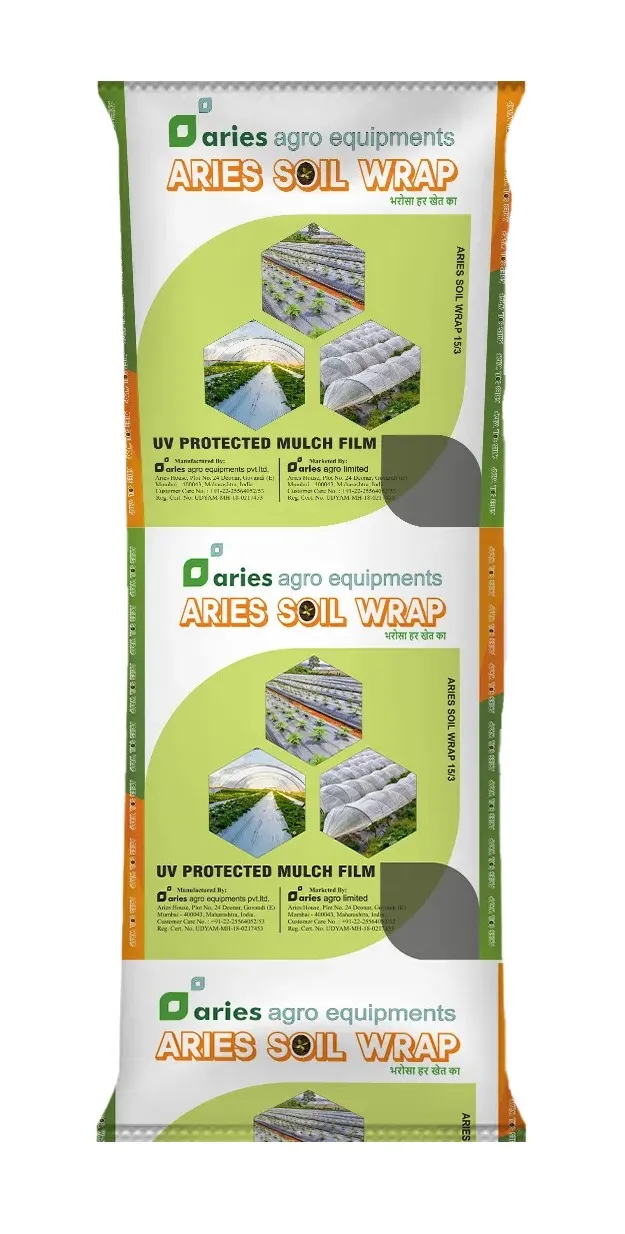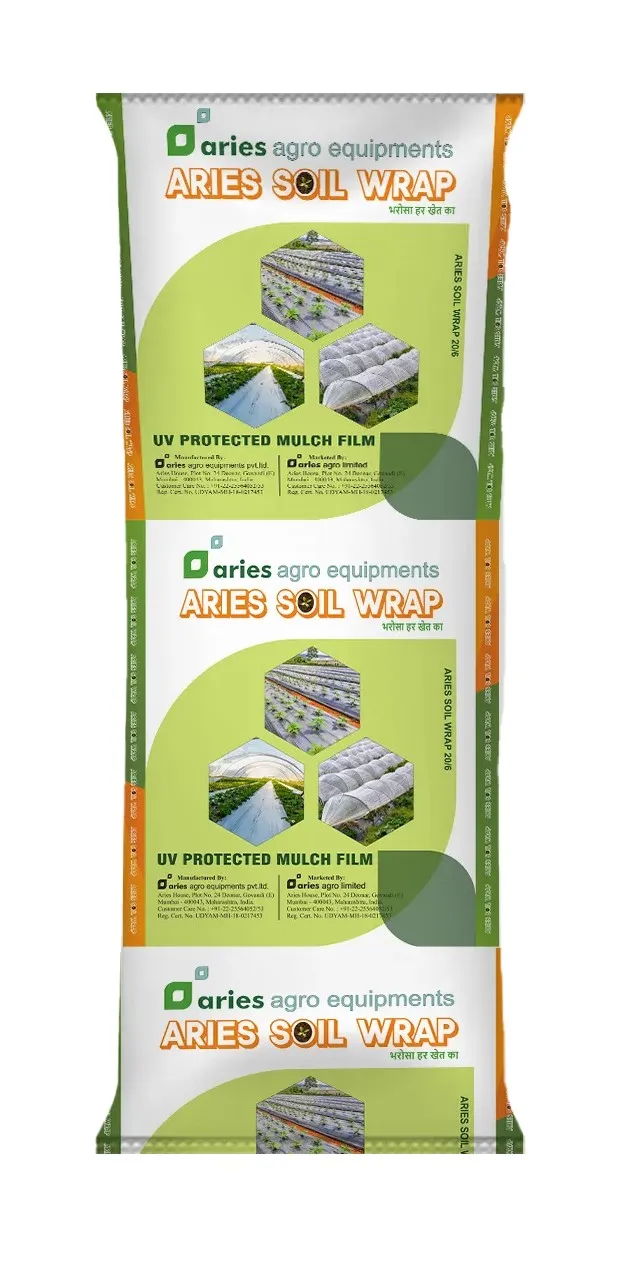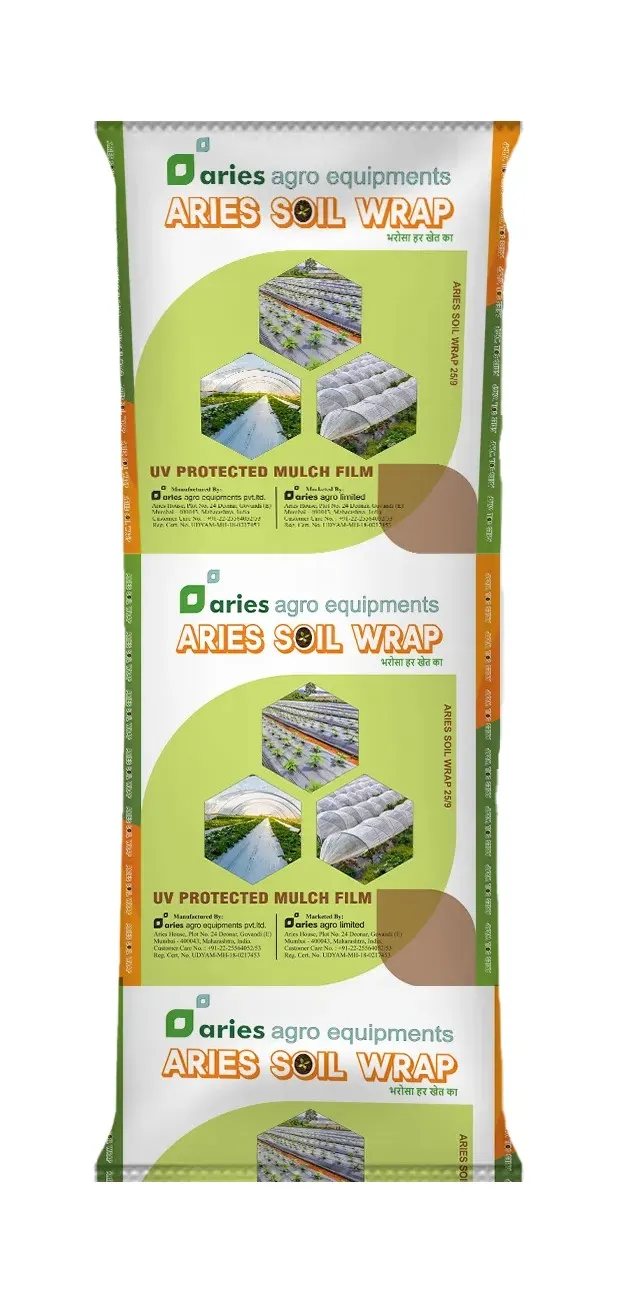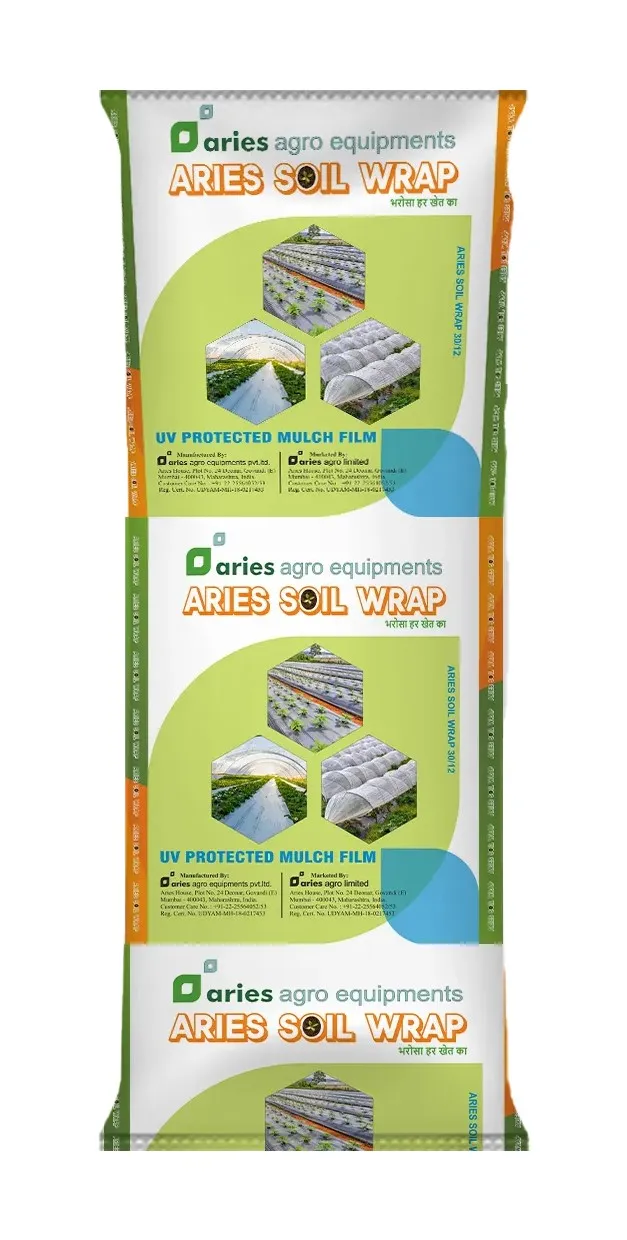
Aries Soil Wrap – Warranty Terms & Conditions
- The warranty is limited to the product description mentioned in Warranty Exclusions.
- The warranty period starts from the invoice date and is applicable as mentioned in Tables 1.0 and 1.1.
- No warranty will be provided for damage caused by unforeseen events, force majeure, normal wear and tear, negligence, improper installation, misuse, or use that does not follow the instructions of Aries Agro Equipments Pvt. Ltd.
Warranty Exclusions
- Damage caused by stones, sharp objects, farming tools, or any external impact is not covered under warranty.
- Cyperus rotundus is one of the world’s most difficult perennial weeds. It is mandatory to remove this weed before installing the mulch film. If it grows through and tears the mulch after installation, it is not covered under warranty.
- Warranty is available only for ASW Root – 3 Month, ASW Grow – 6 Month, ASW Harvest – 9 Month, and ASW Supreme – 12 Month mulch films listed below. No warranty or guarantee is provided for any other mulch products offered by Aries Agro Equipments Pvt. Ltd.
- Damage caused during hole punching, whether by machine, manually, or by any other method, is not covered under warranty.
- All mulch films are resistant up to the specified Sulphur and Chlorine limits. Damage caused due to higher concentrations than the specified limits is not covered under warranty (refer to Table 1.1).
- For any warranty claim, the customer must submit:
- Proof of the manufacturing defect (photos/videos),
- Original outer packaging,
- Purchase invoice.
- Damage caused by people walking on the mulch film is not covered under warranty.
- False warranty claims without valid proof will not be accepted. The buyer may also be responsible for any losses caused to the company due to false claims.
- Damage caused by animals, birds, or insects is not covered under warranty.
- Aries Soil Wrap should be installed at least 10 days after applying natural manure.
- Drip irrigation pipes must be clean before laying the mulch film.
- If acidic chemicals are used to clean the drip system after laying the mulch and this damages the mulch, such damage is not covered under warranty.
- ASW Seed – 2 Month mulch does not carry any warranty or guarantee.
- Crop yield depends on many factors such as soil condition, crop variety, climate, irrigation, and farming practices. Aries Agro Equipments Pvt. Ltd. is not responsible for any loss of crop yield or production.
TABLE 1.0
| Quality | Warranty Period | Applicable Crops as listed | Colour | Remark |
|---|---|---|---|---|
| ASW Seed – 2 Month | No Warranty | Muskmelon, Cucumber, Gourds | Silver/Black | — |
| ASW Root – 3 Month | 1 Month | Watermelon, Muskmelon, Cucumber, Marigold, Gourds, Onion, Garlic, Beans | Silver/Black | Recommended temperature: 25°C – 35°C |
| ASW Grow – 6 Month | 3 Months | Banana, Papaya, Ginger, Turmeric | Silver/Black | |
| ASW Harvest – 9 Month | 6 Months | Banana, Papaya, Ginger, Turmeric | Silver/Black | |
| ASW Supreme – 12 Month | 9 Months | Banana, Papaya, Ginger, Turmeric | Silver/Black | |
| ASW Seed – 2 Month | No Warranty | Muskmelon, Cucumber, Gourds | White/Black | — |
| ASW Root – 3 Month | 1 Month | Watermelon, Muskmelon, Cucumber, Marigold, Gourds, Onion, Garlic, Beans | White/Black | Recommended temperature: 28°C – 37°C |
| ASW Grow – 6 Month | 3 Months | Tomato, Chilli, Brinjal, Capsicum, Cotton | White/Black | Recommended temperature: 35°C – 42°C |
| ASW Harvest – 9 Month | 6 Months | Banana, Papaya, Ginger, Turmeric | White/Black | |
| ASW Supreme – 12 Month | 9 Months | Banana, Papaya, Ginger, Turmeric | White/Black |
Table 1.1 – Sulphur & Chlorine Resistance
| Quality | Warranty Period | Sulphur Resistance | Chlorine Resistance |
|---|---|---|---|
| ASW Root – 3 Month | 1 Month | — | — |
| ASW Grow – 6 Month | 3 Months | 375 PPM | — |
| ASW Harvest – 9 Month | 6 Months | 750 PPM | — |
| ASW Supreme – 12 Month | 9 Months | 1125 PPM | — |
Purchaser’s Responsibilities
- The purchaser must inform Aries Agro Equipments Pvt. Ltd. about any suspected manufacturing defect.
- The company’s inspection team will inspect the product and determine whether the defect is due to manufacturing.
- Aries Agro Equipments Pvt. Ltd. has the sole right to approve or reject any warranty claim.
Warranty Claims
- If a warranty claim is approved, Aries Agro Equipments Pvt. Ltd. will provide only a replacement product.
- The warranty does not cover labour charges, transportation costs, crop loss, or any other compensation.
- Products replaced under warranty become the property of Aries Agro Equipments Pvt. Ltd. and must be returned to the company.
| Do’s | Don’ts | Reason |
|---|---|---|
| Lay the mulch film in the morning or evening when the weather is calm. | Do not lay mulch film during strong winds. | Strong winds make installation difficult and increase the risk of the film tearing. |
| Lay the mulch film evenly with slight tension. | Do not stretch the film too tightly. | Over stretching can cause the film to tear or shrink. |
| Make planting holes carefully to avoid damaging the drip irrigation pipe. Using pre-punched mulch is recommended. | Do not make holes that damage the drip irrigation pipe or the mulch film. | Damaged drip lines and mulch reduce irrigation efficiency and shorten the life of the mulch. |
| After use, remove the mulch film, fold it properly, and store it in one place for disposal or recycling. | Do not leave or throw used mulch film in the field. | Plastic left in the soil reduces soil quality and creates environmental pollution. |
| Collect all plastic pieces while making planting holes and keep the field clean. | Do not leave plastic pieces in the soil. | Plastic residue in the soil reduces soil fertility, productivity, and seed germination. |
| Remove Cyperus rotundus (nut grass) before laying the mulch. Use deep ploughing, soil solarization, or suitable pre- and post-emergence herbicides. | Do not install mulch if Cyperus rotundus is present. | Cyperus rotundus is one of the world’s most difficult weeds to control and can easily pierce the mulch. |
| Use only well-decomposed farmyard manure (FYM) as a basal application. | Do not use fresh manure. | Fresh manure releases gases such as methane (CH4) and hydrogen sulfide (H2S), which can damage the mulch film and plant roots. |
| Complete any required acid treatment of the drip irrigation system before laying the mulch. | Do not perform acid treatment after the mulch has been installed. | Acid treatment after installation can damage or tear the mulch film. |
| Use white/black mulch in areas with high summer temperatures. | Do not use white/black mulch during winter if soil warming is required. | During winter, it may not provide sufficient soil warming, which can reduce vegetative growth. |
| Prepare a smooth, level, and weed-free bed before laying the mulch. | Do not lay mulch on uneven beds or over grass, stones, or large soil clods. | An uneven bed can damage the mulch and reduce its effectiveness. |
| Cover all edges of the mulch film with 4–6 inches (10–15 cm) of soil. | Do not leave the edges of the mulch film uncovered. | Open edges allow wind to lift the film and can affect root-zone conditions. |
| Remove the mulch film after the crop season and dispose of or recycle it responsibly. | Do not burn used mulch film. | Burning plastic causes serious environmental pollution and releases harmful gases. |
Aries Agro Equipments Pvt. Ltd.
Aries House, Plot No. 36 (Old Plot No. 24), Deonar, Govandi (E), Mumbai – 400043, Maharashtra, India.
Customer Care No.: +91-22-25564052/53 | Reg. Cert. No. UDYAM-MH-18-0217453